WOMEN-OWNED. DESIGN-LED. COMMUNITY-FOCUSED.

DESIGN FOR TODAY. PREPARE FOR TOMORROW.
Aging in place is about thoughtful design that makes your home safer, more comfortable, and easier to navigate as life changes — without sacrificing the style that makes it yours.
At Crossroads Flooring & Design, we believe accessibility and beautiful design can go hand in hand.

WHY PLAN FOR AGING IN PLACE?
Your home changes with you.
The way you move through your home today may not be the way you move through it ten, twenty, or thirty years from now. And sometimes those changes happen sooner than we expect.
Planning ahead during a remodel can give you the opportunity to make thoughtful improvements before they become necessary.
Aging-in-place design can help:
- Reduce unnecessary trip hazards
- Make bathrooms easier and safer to use
- Improve movement between rooms
- Make everyday tasks more comfortable
- Accommodate changing mobility
- Prepare a home for multigenerational living
- Allow homeowners to remain in the home they love longer
You don't have to be "old" to think about aging in place.
It's simply good design with the future in mind.
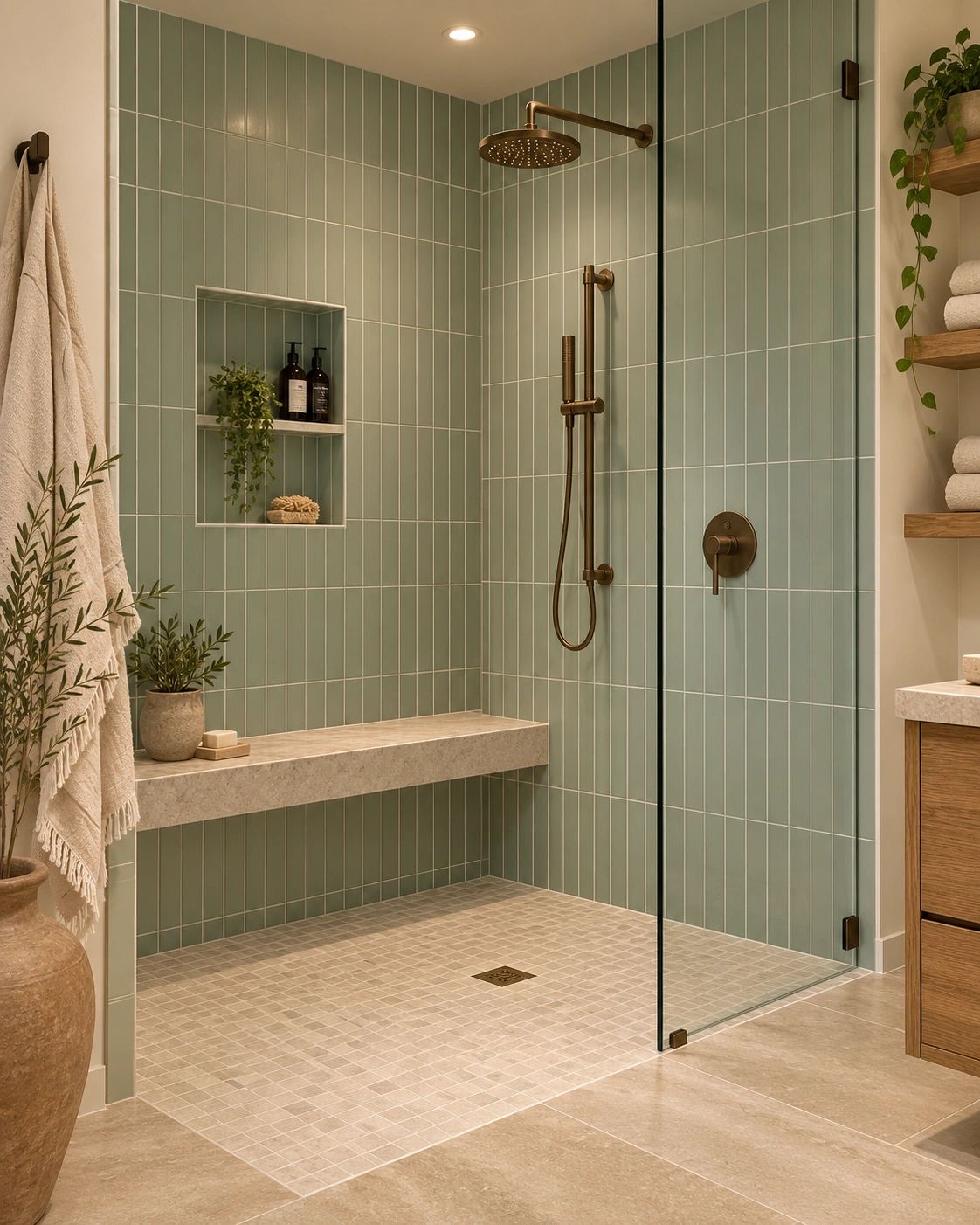
CURBLESS SHOWERS
One of the simplest ways to make a bathroom easier to navigate is to rethink the traditional shower curb.
A curbless or low-threshold shower creates a more seamless transition into the shower area, reducing the need to step over a raised edge. It can be especially helpful for homeowners planning for changing mobility — while also creating the clean, modern look many homeowners want today.
Lower Threshold
Reduce the height you have to step over when entering the shower.
Seamless Design
Create a continuous visual flow between the bathroom floor and shower.
Flexible Future
A well-planned shower can accommodate changing mobility needs over time.
COLOR, CONTRAST & THE AGING EYE

COLOR MATTERS MORE THAN YOU THINK
As we age, the way we see color, contrast, depth, and light can change.
The eye gradually becomes less sensitive to subtle differences in color and contrast. Glare can become more difficult to manage, and colors may not appear quite as crisp or distinct as they once did.
That's why color selection in an aging-in-place home isn't simply about choosing what looks beautiful.
Color can help define space, highlight important transitions, and make everyday movement easier to navigate.
CONTRAST HELPS DEFINE THE SPACE
When adjacent surfaces are very similar in tone, edges and changes in elevation can become harder to distinguish.
Thoughtful contrast can help visually define:
- Floors from walls
- Countertops from cabinets
- Shower floors from shower walls
- Doorways and openings
- Steps and changes in elevation
- Fixtures against surrounding surfaces
The goal isn't to create a high-contrast or visually busy home.
It's to use intentional contrast where it matters.
TONE CAN CHANGE HOW A ROOM FEELS
Color and value also influence how we perceive the size and shape of a space.
Lighter, more reflective surfaces can help a space feel brighter and more open, while darker or highly contrasting elements can visually define boundaries and focal points.
For aging-in-place design, we're looking at the entire palette — not just whether the colors coordinate.
WATCH THE GLARE
More light isn't always better.
Highly reflective surfaces, polished finishes, and strong differences between bright and dark areas can create glare and make it harder to see comfortably.
That's why finish selection matters alongside color.
A beautiful space should also be comfortable to see and navigate.
DESIGN ISN'T JUST ABOUT WHAT YOU SEE.
IT'S ABOUT HOW YOU SEE IT.
Handheld Shower Systems
Handheld Shower Systems
Handheld Shower Systems

A handheld shower can provide greater flexibility and control, particularly when used alongside a fixed shower head.
Shower Seating
Handheld Shower Systems
Handheld Shower Systems
A built-in or thoughtfully planned shower seat can provide comfort and flexibility without compromising the overall design.
Easy-To-Reach Controls
Handheld Shower Systems
Easy-To-Reach Controls
Thoughtful placement of shower controls can make the shower easier to operate without reaching across the water stream.
Grab-Bar Preparation
Grab-Bar Preparation
Easy-To-Reach Controls
Even if you don't need grab bars today, walls can be planned and reinforced during construction so they're ready if your needs change later.
Built-in Storage
Grab-Bar Preparation
Built-in Storage
Recessed niches and accessible storage can keep everyday products within comfortable reach while keeping the shower clean and uncluttered.

WATERPROOFING MATERS
What's Behind The Tile Maters!
A beautiful shower starts long before the tile goes on the wall.
When you're creating a curbless shower, shower bench, recessed niche, or other custom feature, proper waterproofing is essential to protecting the structure behind the tile.
A shower can look perfect on the surface, but the materials and installation methods underneath are what help keep water where it belongs — inside the shower, not behind it.
Modern waterproofing systems can create a continuous barrier behind and beneath the tile, helping protect walls, corners, niches, benches, and shower floors from moisture.
For a custom shower, waterproofing needs to be considered as part of the overall design — especially when incorporating features such as:
- Curbless or low-threshold entries
- Recessed shower niches
- Built-in or fold-down benches
- Linear drains
- Large-format tile
- Custom shower configurations
Why We Choose Schluter:
The tile is what you see.
The waterproofing is what protects what you don't see.
That's why proper preparation and installation matter just as much as selecting beautiful materials.
PLAN FOR THE FUTURE
Plan For The Future - Even If You Don't Need It Now
You don't have to install every accessibility feature today to prepare your home for tomorrow.
Some of the smartest aging-in-place decisions happen behind the walls, while a remodel is already underway.
WHO IS AGING IN PLACE FOR?

Aging in place isn't only for retirees.
It's for anyone who wants to create a home that can adapt as life changes.
The best time to think about accessibility is before you need it!
Planning Ahead
You're creating your forever home and want to make smart choices now.
Multigenerational Living
Your home needs to work comfortably for different generations under one roof.
Changing Mobility
An injury, illness, or change in mobility can alter how you use your home.
Staying Home Longer
You love where you live and want your home to remain comfortable and functional for years to come.